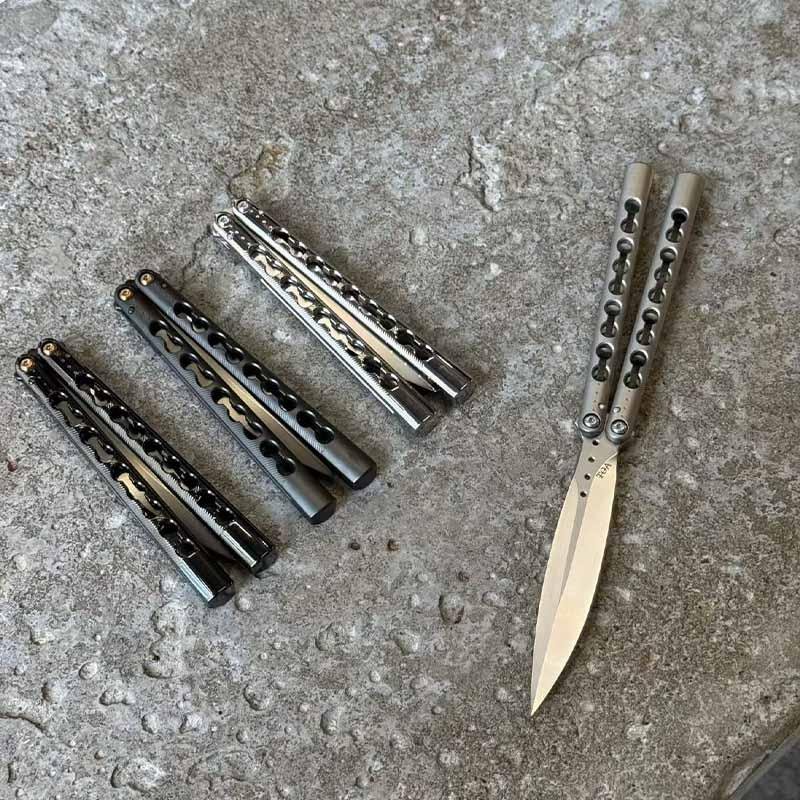
TOA DS-1 Original Balisong
Designed by Guyan, the DS-1 is the first model from the TOA Dynamic Sound Series. Compared with previous TOA designs, the DS-1 introduces a completely new approach in terms of design style, structure, and flipping performance tuning.
The DS-1 features an integrated TC4 titanium alloy handle structure. Through extensive milling, side grooves, and curved handle geometry, the design achieves a slim, balanced profile while providing excellent control and feedback during flipping.
Inspired by the positive feedback from the Apollo model, the DS-1 adopts a similar weight distribution and handle contour philosophy. However, unlike the Apollo’s titanium sandwich construction with inserts, the DS-1 uses a full one-piece titanium handle design, resulting in a thinner and more refined overall profile.
With a total weight of approximately 118g, the DS-1 delivers a balanced flipping experience with a lightweight and elegant feel.
The DS-1 prototype was showcased at the 2026 Atlanta Blade Show, where it received strong recognition from international flipping enthusiasts. Based on feedback from both domestic and overseas players, the production version has received further optimization and improvements.
The blade design uses a large-surface-area profile while maintaining the ideal weight and inertia balance. This not only enhances visual flow during tricks but also improves the blade-to-handle ratio for a more compact and refined overall design.
Built for advanced flipping performance, the DS-1 utilizes a press-fit stop pin structure to improve durability and long-term reliability.
The hardware uses T10 steel screws, providing strong structural support for maintenance and adjustments. Each accessory package includes additional replacement screws to improve long-term usability.
Specifications:
- Model: TOA DS-1
- Designer: Guyan
- Handle Material: TC4 Titanium Alloy
- Structure: Integrated Titanium Handle
- Blade Material: Stainless Steel
- Weight: Approx. 118g
- Pivot System: Bushing System
- Stop Pin: Press-fit Structure